The rapid adoption of AI and automation is exposing a growing leadership challenge: organisations need transformation capability faster than traditional executive hiring models can provide.
AI’s impact on leadership is becoming most visible in one area: the speed at which organisations are expected to transform while still delivering performance. Technology programmes are no longer isolated initiatives. They have become enterprise-wide shifts that reshape structure, decision-making, and accountability across the business.
In this environment, traditional leadership hiring cycles are increasingly misaligned with the pace of change. As a result, organisations are turning to more flexible leadership models to bridge capability gaps during periods of uncertainty and redesign.
This is where interim executives are becoming a critical lever in how businesses approach tech transformation.
Tech Transformation Is a Leadership Problem
Most organisations begin their transformation journey with a clear technology agenda:
- Automation of manual processes
- AI-driven decision-making tools
- Data modernisation
- Platform consolidation
- Operational efficiency programmes
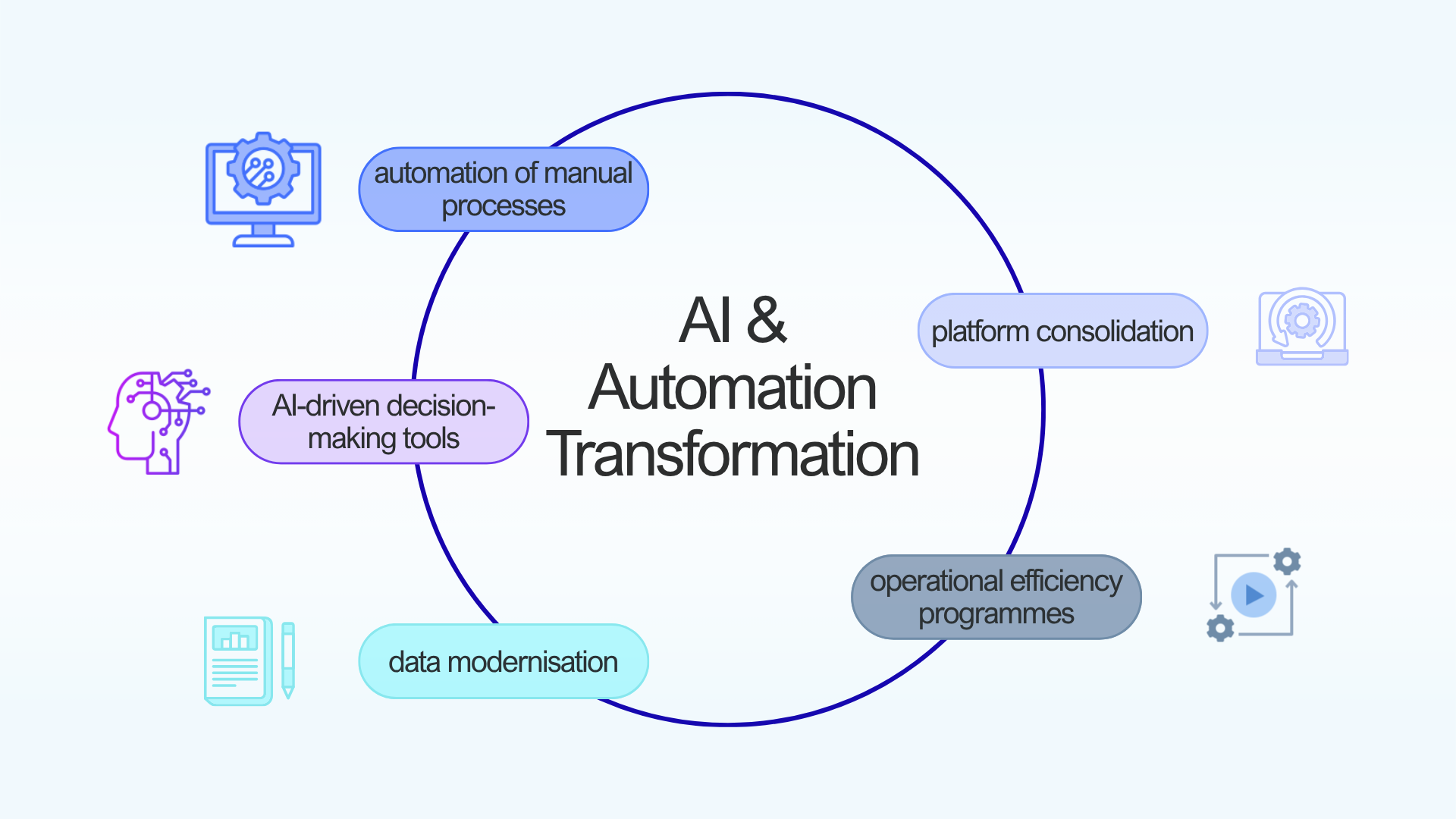
However, as these programmes scale, the complexity shifts away from systems and into leadership.
Tech transformation introduces organisational friction — not because of the tools being implemented, but because of the structural and behavioural change required to embed them. Operating models evolve mid-implementation. Reporting lines shift. Capability gaps surface. And leadership teams are often required to make decisions without full visibility of the end-state design.
This is where transformation often becomes difficult to sustain.
Organisations may have the strategy and ambition, but without leaders experienced in navigating transformation and change, execution becomes significantly more difficult.
Why Interim Executives Are Becoming Central to Transformation Strategy
To maintain momentum, organisations are increasingly engaging interim executives who can step into transformation environments without the long lead times associated with permanent hiring.
Unlike traditional appointments, interim leaders are typically brought in for one purpose: to stabilise, accelerate, and deliver change.
In the context of AI-driven transformation, they are often used to:
- lead enterprise-wide digital or automation programmes
- define governance around AI adoption
- reset failing transformation initiatives
- align business and technology stakeholders
- build internal capability while delivery is underway
Their value lies in the ability to step into complex environments quickly, bringing the experience and commercial judgement needed to create impact from day one.
This becomes particularly important when the AI impact on leadership is creating roles that evolve faster than they can be permanently defined.
The Impact of AI on Leadership Expectations
AI is changing what boards expect from executive teams.
Leadership is no longer defined solely by functional expertise. Organisations now require leaders who have the ability to do the following:
- interpret technological change through a commercial lens
- make confident decisions in fast-moving and often ambiguous environments
- lead hybrid workforces that combine human capability with AI and automation
- manage evolving governance, risk, and compliance considerations
- translate technical innovation into practical business execution and measurable outcomes
This shift is redefining leadership readiness.
In many cases, organisations are discovering that the leaders who can deliver early-stage transformation are not always the same leaders who can scale it. This creates a structural gap between strategy and execution, particularly in large or complex organisations undergoing tech transformation.
From Permanent Structures to Flexible Leadership Models
The rise of interim executives reflects a broader shift in how organisations think about leadership capacity.
Rather than building every capability internally, organisations are adopting more flexible leadership models that allow expertise to be brought in at the point of need.
This approach allows organisations to:
- respond faster to transformation demands
- avoid overcommitting to permanent structures too early
- bring in specialist experience for defined phases of change
- retain flexibility as operating models evolve
In practice, interim leadership is becoming less of a contingency option and more of a strategic lever for transformation, growth, and organisational adaptability.
It enables organisations to maintain momentum during tech transformation programmes without waiting for long-cycle executive hiring processes to conclude.
A More Fluid Definition of Executive Capability
As AI continues to reshape industries, executive capability is becoming less static.
The leaders creating the greatest impact are those who can remain balanced while operating effectively across complexity:
- transformation design and execution
- strategic vision and operational delivery
- technology understanding and business impact
This is where interim executives are particularly valuable. With cross-sector experience and exposure to multiple transformation cycles, they recognise patterns quickly and avoid common failure points.
In a market defined by the AI impact on leadership, this experience becomes a differentiator.
Flexible Leadership as a Structural Advantage
What is emerging goes beyond hiring preference. It reflects a structural shift in how organisations define and design leadership.
A blended model is becoming more common:
- permanent executives providing continuity and long-term direction
- interim executives providing targeted transformation leadership
- project-based specialists supporting specific phases of tech transformation
This structure allows organisations to adapt leadership capacity in line with business needs, rather than fixed organisational design.
In fast-moving environments shaped by AI, that adaptability is becoming a competitive advantage in itself.
How Interim Executives Accelerate Transformation
As AI continues to reshape how organisations operate, experienced interim leaders are becoming essential to delivering successful transformation.
JMR partners with organisations globally to identify senior leaders who drive transformation, stabilise execution, and create measurable impact in high-change environments.
Explore how interim leadership can support your transformation agenda.